
Khenshu
Abstract geometric shapes Rug
Abstract geometric shapes Rug
Couldn't load pickup availability
HISTORY
Tufting as a distinct technique emerged in the late 19th–early 20th century, when Catherine Evans Whitener in Dalton, Georgia began stitching yarn into muslin to create plush bedspreads. By the mid-20th century, tufting evolved into both an art and an industry, offering a more flexible and affordable alternative to hand-knotted rugs. In India, the craft grew into a respected artisanal practice: yarns are tufted through a base fabric using a gun or needle, then sheared, finished and backed to create soft, richly textured surfaces.
Today, the hand-tufted rug stands at the intersection of craft, art and interior design. It retains many of the manual touches of traditional textile making yarn selection, hand-finishing, customized sizes, and artisanal color palettes while offering fresh forms, abstract designs and luxury finishes.
DESCRIPTION
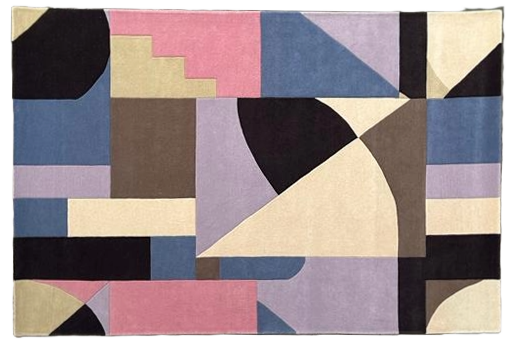
The Abstract Geometric Shapes Rug by Khenshu is a bold conversation between color, form, and craftsmanship. Inspired by modernist abstraction, it brings together an expressive play of shapes triangles, arcs, and stair-like steps rendered in a refined palette of lilac, blush, beige, and espresso.
Meticulously hand-tufted from New Zealand wool and viscose, this rug balances the plush softness of wool with the subtle sheen of viscose. The layered patterning feels almost architectural a tactile painting for the floor, where every angle and edge has purpose.
Designed and handcrafted by Khenshu, a luxury furniture brand to look for, this rug celebrates individuality and modern artistry. Each piece can be customized in color, form, or scale making it not just a furnishing, but a collectible design statement.
MATERIALS: New Zealand Wool, Viscose
PROCESS AND CRAFT
Using a tufting gun, the artisan inserts loops of New Zealand wool, viscose, or blended yarn through the fabric according to the design. Every push of the gun is manual, demanding steady rhythm and practiced precision. The yarn forms the rug’s pile, either cut or looped, determining its texture and height. The speed and accuracy of this stage come only with years of experience, as artisans essentially “paint” with yarn.
The rug is thoroughly washed to soften the fibers and bring out the natural sheen of wool and viscose. Edges are bound and inspected multiple times to ensure durability and finish quality. The entire process from drawing to drying is done by hand, making each rug a one-of-a-kind creation.
CARE
Vacuum gently once a week using low suction to remove surface dust. Avoid using a beater bar or rotating brush, as it may damage the fibers.
Rotate your rug every few months to ensure even wear and to prevent fading in sunlit areas.
Avoid moisture exposure blot spills immediately with a clean, dry cloth. Do not rub, as it may push stains deeper into the pile.
For long-term care, professional cleaning is recommended once a year, especially for viscose-blended rugs.
Never steam clean or saturate your rug with water. Viscose, being delicate, should only be cleaned using dry methods handled by specialists.
Share